
Nobody noticed the first warning sign.
Not the cabin lights flickering. Not the sudden drop that stole everyone’s breath. Not even the engines sounding wrong—too quiet, too hollow.
What they noticed was the scream.
She came running down the aisle barefoot, heels abandoned, mascara streaked down her cheeks. The flight attendant wasn’t supposed to look like this. She was supposed to be calm. In control.
Instead, she looked terrified.
“Does anyone here know how to operate an airplane?!”
The cabin froze.
A businessman stared straight ahead. A mother clutched her son so tight he whimpered. A retired pilot in the back lowered his eyes, ashamed of his failing vision, his trembling hands.
Silence.
Then a hand went up. Small. Uncertain.
A boy. Maybe fourteen. Skinny. Hoodie pulled over his head.
“I can,” he said.
Someone laughed nervously. “Is this a joke?”
“We’re dead,” another passenger muttered.
The flight attendant spun toward him. “Where did you learn that?”
The boy met her eyes. “I can’t tell you.”
The captain’s voice crackled through the speakers—weak, terrified.
“Mayday… Mayday… Flight 714… both pilots incapacitated… autopilot failing…”
The line went dead.
A woman screamed.
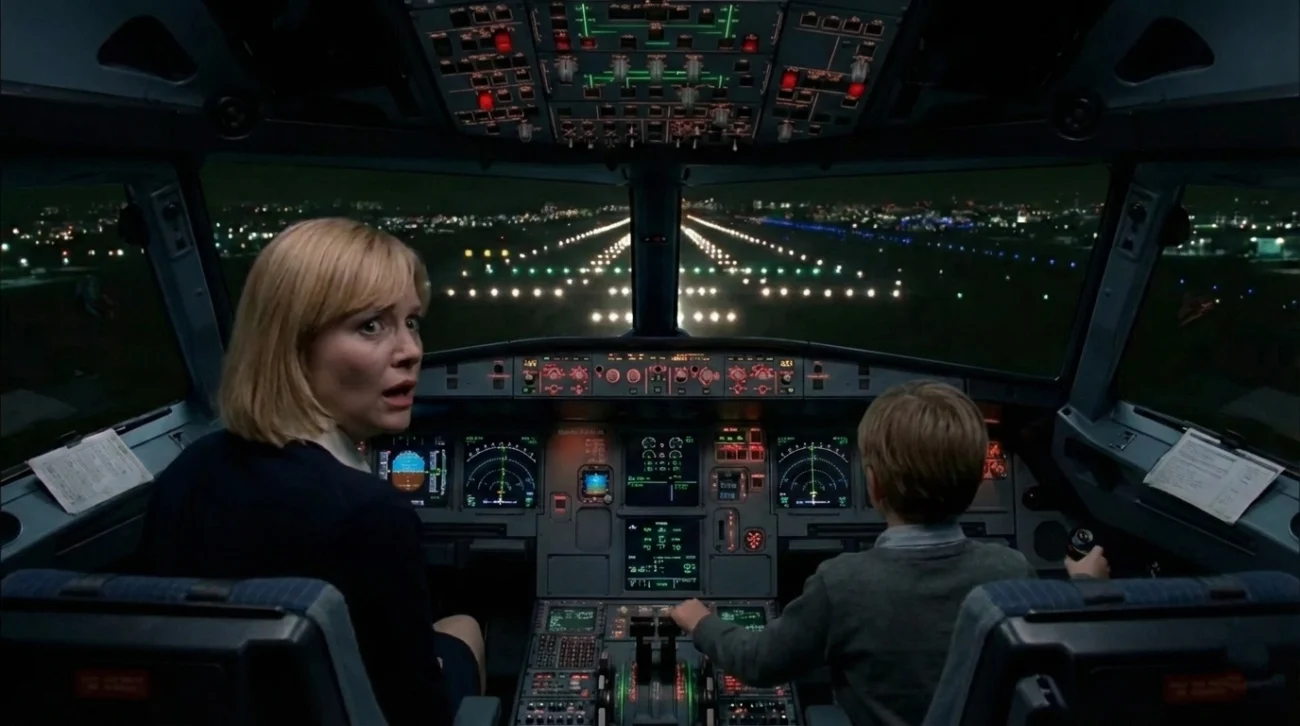
The flight attendant grabbed the boy’s wrist and pulled him toward the cockpit. No time to argue. No time to think.
The cockpit door opened.
Both pilots slumped forward. One unconscious. The other not breathing.
Every alarm screaming. Altitude dropping. Speed unstable. Red lights flashing everywhere.
“This isn’t a game,” she whispered. “If you’re lying, we all die.”
“I know,” the boy said.
He climbed into the captain’s seat like he’d done it before. Too comfortably.
His fingers hovered over the controls—not confused, not curious. Like someone checking off a list.
“You don’t even know his name,” the flight attendant said, voice shaking. “How do you know what any of this means?”
“I told you. I can’t tell you.”
The plane lurched violently.
Oxygen masks dropped. Someone vomited in the back. Prayers echoed through the cabin.
The boy strapped himself in. “I need you to listen carefully.”
His voice didn’t shake.
“I’m listening.”
“Contact air traffic control. Put them on speaker. And don’t argue when they say this is impossible.”
She obeyed.
The controller’s voice crackled through. “Who am I speaking to?”
The boy leaned forward. “The one flying the plane.”
A pause.
“I need the pilot.”
“You have him.”
Longer pause.
“How old are you?”
“Fourteen.”
The silence felt heavier than gravity.
“This is not a joke,” the controller finally said.
“I know,” the boy replied. “I don’t joke when lives are on the line.”
Something about the way he said it sent chills through the cockpit.
The controller gave instructions. The boy followed them—not just correctly, but early. Adjusting controls before being told. Anticipating problems before alarms sounded.
The flight attendant stared at him like he was a ghost.
“How do you know that?”
“I’ve been here before.”
Her heart skipped. “On a plane?”
“No. In this situation.”
The plane shook again. Altitude dropped another thousand feet.
“You’re coming in too fast,” the controller said urgently. “Reduce speed now or you won’t make the runway.”
“I know. I’m fixing it.”
He cut power to one engine.
The flight attendant gasped. “You’ll stall us!”
“Trust me.”
For three terrifying seconds, the plane dipped.
Then stabilized.
The controller exhaled audibly. “How did you—”
“Focus,” the boy interrupted. “You don’t want to miss this part.”
Runway lights appeared in the distance.
Too fast. Too steep.
Passengers screamed as the ground rushed closer.
“Pull up!” the controller shouted.
The boy didn’t.
At the last possible second, he adjusted the angle.
The wheels slammed onto the runway hard enough to knock the breath from everyone.
Sparks flew. The plane skidded. Screeched. Shuddered.
Then stopped.
Silence.
For one long second, no one moved.
Then the cabin exploded—crying, shouting, laughter, prayers, applause. People hugged strangers. Fell to their knees. Called loved ones through tears.
The flight attendant turned to the boy. Her hands shook now that it was over.
“You saved everyone.”
He unbuckled his seatbelt. “I told you I could.”
Emergency crews rushed the plane. Authorities climbed aboard. Questions flew. Cameras flashed.
An officer knelt in front of the boy.
“Son, we need to know how you did this.”
The boy looked past him, out the window, at the sky.
“My dad was a pilot. He died in a crash just like this. Autopilot failure. No one knew what to do.”
The flight attendant felt her chest tighten. “So you learned to fly to honor him?”
The boy shook his head. “No. I learned so it wouldn’t happen again.”
The officer frowned. “Where did you learn?”
The boy met his eyes. “In simulators. Real ones. Over and over. Crashes. Failures. Emergencies. I practiced until I stopped failing.”
“At fourteen?”
The boy stood up, suddenly looking very small again. “Someone had to.”
As he walked past the cheering passengers, a reporter pushed through the crowd.
“What’s your name, kid?”
He paused at the cockpit door.
“Doesn’t matter,” he said quietly. “What matters is that next time someone asks if anyone can fly a plane, someone will know the answer.”
“You saved 247 lives today,” the reporter pressed. “Don’t you want credit?”
The boy looked back at the empty captain’s seat. At the unconscious pilots being carried out on stretchers. At the passengers hugging their families.
“My dad didn’t get credit,” he said. “He just got a headstone. I don’t need my name on the news. I need people to be prepared.”
The officer stood up. “We’ll want to debrief you. The FAA will have questions. The airline—”
“I’ll answer them,” the boy said. “All of them. Because the next kid who loses a parent to a crash like this deserves to know they can do something about it.”
He turned to the flight attendant one last time.
“You asked where I learned,” he said. “Tell them I learned from losing someone I loved. Tell them grief doesn’t have to be wasted. It can be turned into something that saves lives.”
She nodded, tears streaming down her face.
The boy walked down the airplane stairs into the flashing lights and chaos below.
Behind him, 247 people were alive because a fourteen-year-old boy refused to let tragedy have the final word.
Because he’d spent three years in a basement simulator, reliving his father’s last moments, learning from every mistake, every missed opportunity, every second that could have made a difference.
Not for revenge.
Not for glory.
But so that when the moment came—when someone screamed “Does anyone know how to fly?”—he could raise his hand and say two simple words.
“I can.”
And this time, everyone made it home.
Original fictional stories. AI-assisted creative content.

Wonderful !
What is the name of this movie
there is no movie based on this story yet
This one really pulled some ❤️ strings, teary-eyed and a lump in the throat while reading. I really appreciate 🙏 and enjoyed this story. A young teen 💖 who really taught the 🌎 about making life matter.
Love reading these stories u can learn a lot from them